
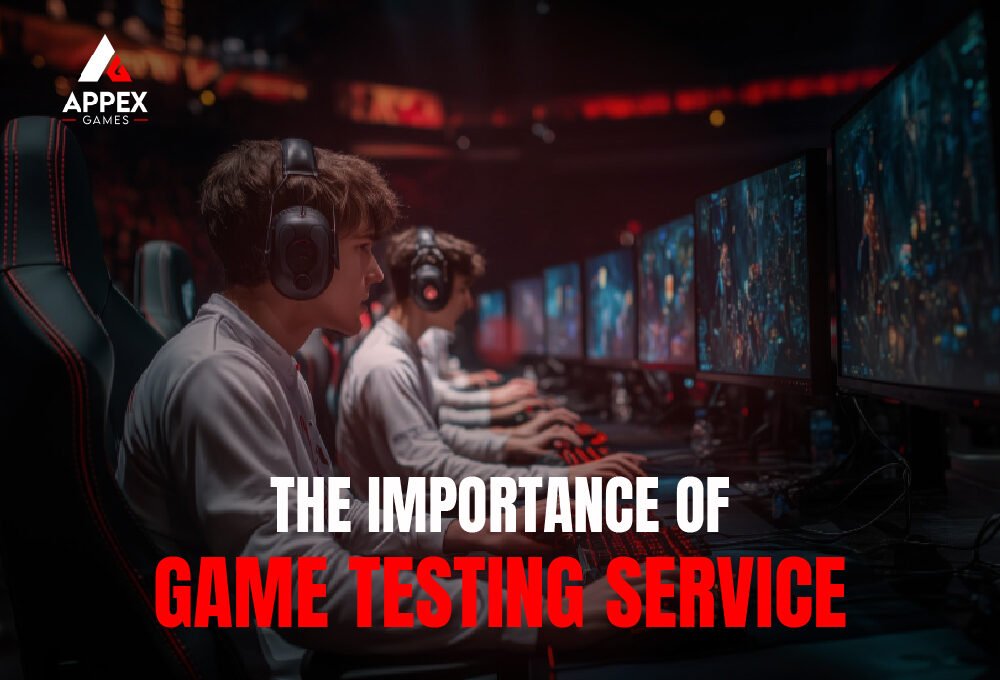
The global gaming scene keeps changing at rocket speed, and fans demand absolute excellence. They expect crystal-clear graphics, smooth gameplay, rich sound, and menus that make total sense. One little hiccup like bugs, crashes, or device conflicts, and even the prettiest game can bomb at launch. Game testing services swoop in to save the day. Testing isn’t just busy work; it’s compulsory. During this phase, the whole title is examined to make sure it lives up to quality guidelines and that players walk away happy. Whether you’re debuting a mobile match-three or a full-on multiplayer VR shooter, top-notch testing isn’t optional; it’s the secret ingredient for success. Spotting bugs upfront prevents the play store panic, jam-packed reviews, and budget-draining patches after launch. Quality testing polishes the entire package and guarantees that the title ticks all the tech boxes, leading to a winning debut.
What Are Game QA Services?
Game QA services (quality assurance) employ rigorous testing practices. They perceive and address issues before a sport is launched. These services are handled by skilled game testers who check out a game’s functionality and overall performance. There are various QA testing methods, such as automated testing and compatibility testing. Each serves in sharpening the very last product.
Manual vs. Automated Game Testing
Manual and automatic testing are important tactics utilized in recreation QA.
Manual Game Testing: This involves testers playing through the sport like real users. It identifies bugs in gameplay, UI, pics, controls, and narrative drift. It is ideal for checking subjective reports. It consists of recreation stability and user satisfaction.
Automated Testing: Scripts and gear are used to run repetitive test instances quickly. Computerized testing is incredible for detecting memory leaks and overall performance bottlenecks.
The Critical Phases of Game Testing
Alpha and Beta Testing
Alpha testing is usually carried out internally with the aid of sport builders and QA groups. It focuses on catching the main insects early in development.
But, Beta testing includes a limited number of outside customers. This gives honest international feedback on game performance. It also reports person engagement earlier than release.
Each stage is vital in knowing how the sport performs in real consumer situations. It also helps in various environments.
Compatibility Testing
Compatibility testing guarantees that the sport functions smoothly across various screen sizes and GPU/CPU specifications. It is specifically essential for testing mobile games.
Multiplayer and performance testing
Online multiplayer video games require special attention due to their complex structures and real-time mechanics. Multiplayer testing verifies synchronization between gamers, server communication, lobby structures, and suit-making functions. Game performance testing tests for body price consistency, loading times, and overheating troubles. It makes sure that the sport runs optimally without lags or crashes.
Localization Testing
Globalization is a significant trend in the gaming industry. Localization testing is essential for adapting a game to various languages and areas. This includes verifying translated textual content, cultural references, UI format changes, and more. Terrible localization can confuse players or even offend them. It hurts your recreation’s recognition and sales.
UX and Functional Testing
UX testing for games ensures the game is enjoyable from a participant’s perspective. This consists of comparing menu layouts, controls, navigation, and academic readability. Functional testing checks that all features, like achievements and store/load functions, are working.
VR Game Testing
Virtual reality video games carry new challenges and possibilities. VR game testing consists of evaluating immersive gameplay mechanics and physical consolation. That is a spot requiring specific gear and knowledge.
Why Game Testing Is Non-Negotiable
1. Player Retention and Reputation
In the digital age, gamers can quickly post their bad reports on forums and social media. A single Trojan horse can lead to poor evaluations and uninstallations. By using expert game QA services, builders can boost player retention and game credibility.
2. Saves money and time in the long run
Early test case creation introduction can prevent main troubles at the submission. It saves fees on emergency patches. A well-examined recreation reduces the threat of refund requests and terrible PR.
3. Supports Monetization and Revenue Goals
A solid, exciting game helps improve game revenue strategies. It includes in-app purchases, ads, and subscription models. If gamers encounter technical issues while trying to make a purchase, it affects your bottom line directly.
4. Essential for indie developers
Monetizing indie video games relies on the game’s success. Indie teams benefit immensely from outsourcing QA to specialized game testers.
Best Practices for Game Testing
Start early: begin with checking case-making plans during early improvement.
Test across platforms: For multi-platform games, this process includes compatibility testing on all target devices.
Combine Manual and Automated Testing: Leverage the strengths of both methods for the whole insurance industry.
Use real devices: Emulators are beneficial however, they need to be supplemented with actual tool checkouts for accuracy.
Involve real users: Beta testers provide treasured feedback from a consumer’s point of view.
Tools and Services for Game Testing
Unity Test Framework: Great for Unity-powered games. It allows you to write unit tests and automate gameplay checks.
Appium and TestComplete: Useful for mobile game automation.
BrowserStack and Sauce Labs: Help with device compatibility testing.
AppexGames QA Services: Offers full-cycle game QA solutions for indie and enterprise-level projects.
Conclusion
Game testing services play a critical role in making sure that your sport launches efficiently. From manual game testing to automated testing, every technique adds value in its way. It contributes to a refined and engaging experience. With growing expectations of round snapshots and overall performance, skipping or minimizing QA may be a high-priced mistake, whether or not you’re constructing a cellular title, a VR experience, or a multiplayer game. It makes an investment, which ensures your sport meets the gold standard of first-class performance. In case you’re searching for dependable and complete QA solutions, AppexGames offers game QA services. It helps you carry the pleasant version of your recreation to gamers worldwide.
Want to dig deeper into the improvement pipeline? Take a look at our preceding blogs:
The Role of Sound Design in Gaming
Developing Games for Cross-Platform Play
Choosing the right game engine for your project
Meta Description
From mobile apps to VR, game QA prevents bugs, boosts retention, and ensures flawless launches. Discover the importance of game testing today.
FAQs
What are game testing services, and why are they important?
Game testing services find and fix bugs, visual glitches, and performance hitches. It keeps a title from shipping with critical faults. Their role is important because players expect seamless experiences, and a single ignored problem can negatively impact press. Smoother launches, therefore, refine player satisfaction, spare engineers from expensive “fix it now” patches, and safeguard both reputation and revenue for the studio.
How does game QA differ from previous software QA?
Game QA is a narrative and play-centered discipline. Testing does go further than functional checks, controllers, frame rates, and server latency, yet it also dives into how the experience feels, how music and visuals weave into atmosphere, and how a character arc resonates. Where software QA’s question is “Does it work?” game QA’s is “Does it captivate?” Subjective quality is measured, debated, and tuned as rigorously as code.
What are the core testing methodologies?
Core methodologies are: manual, for the human touch; automated, for speed; compatibility, for hardware harmony; performance, for stable frame rates; localization, for cultural fidelity; multiplayer, for lag and cheating; UX, for maze-breaking, broken; and VR, for motion comfort. Every approach answers a different question, but all harmonize toward the game playing as it was intended, no matter the system.
When should testing begin?
Testing should launch the moment a build is first playable. QA, engine, and design should walk through the same executable, spotting low-hanging challenges and discussing future ambitions in the same room. Early bugs are smaller and clearer, and continuous rounds of testing update the narrative of bugs and polish, creating a more stable, refined title for the moment the press kits arrive.
Why is beta testing crucial ahead of the game launch?
Beta testing lets players get hands-on before the full release, helping developers assess performance, spot glitches, and gauge overall fun. Watching real players live shows teams how the game runs in everyday settings, on various hardware, and any last issues can then be polished out.
How do manual and automated testing reinforce each other in gaming QA?
Manual testing examines playability, the feel of interfaces, and the rhythms of the narrative. At the same time, automated routines continuously scrub performance stats and double-check against previous builds. Together, the two approaches ensure technical smoothness and the emotional heart of the player experience stay on target.
How does localization testing boost a game’s worldwide success?
Localization testing checks that translations, cultural subtleties, and interface placements click in each target market. By synchronizing language, icon art, and sound design with regional norms, developers enhance accessibility, reduce confusion, and strengthen player attachment on a global scale.
How much do indie studios pay for testing versus major publishers?
Indies might outsource QA for a couple grand, whereas AAA teams drop six figures or more. That’s usually a consequence of sprawling worlds, countless systems, and the vast Polish demands of a single market entry. Real budgets hinge on the game’s size, the depth of testing depth, and the number of platforms it’s set to launch on.
How does quality assurance affect player loyalty and spending?
Smooth launches create trust and engage users, expanding session lengths, improving store reviews, and nudging freemium or subscription spending higher. Yet a game riddled with bugs can cause uninstall spikes, refund deluges, and large revenue downgrades that fast leave publishers.
What’s the distinction between quality assurance and playtesting?
QA hunts for crashes, freezing, stutters, and memory leaks. Playtesting calls attention to pacing, thrill, and overall satisfaction. QA stabilizes, playtesting balances. Combine both, and the game launches in a desirable state.
Why does compatibility testing matter for mobile games?
Not a single standard exists developers must consider an ocean of handsets, each with different screen sizes, OS permutations, GPU capabilities, and sensor variations. Only solid compatibility testing shields apps from market fragmentation risks.
Running compatibility tests guarantees a game maintains its reliability across hardware families and software versions. Players encounter a seamless introduction rather than abrupt crashes and distortions that diminish personal enjoyment and rattle aggregate ratings, directly swaying visibility in crucial app-store rank disputes.
How do QA services keep multiplayer gameplay silky? Analysts construct and execute controlled scripts to validate every server interaction, bench-mark sampling and seating algorithms, hyper-analyze state and event synchronization, and quantify lag compensation across a complex blend of payloads. They orchestrate synthetic stress caps to validate locked frame rates, rapid in-memory streaming, and sub-second recovery to arriving content CDNs and cloud nodes, assuring players enjoy flawless experiences on every supported family of devices.
What weight does accessibility testing now carry? Comprehensive accessibility assessment guarantees informed engagement for every potential player, regardless of mobility, auditory, or visual difference. Experts audit granular subtitle scaling in size and timing, adaptive color-filter palettes, exhaustive remapping matrices for custom device input and meaningful audio alerts. The broad inclusion upper-cases player adoption and guarantees compliance with regional equitable-design mandates, now formal in dozens of international jurisdictions.
How sharply does outsourced QA, then, cut the countdown to market? By posting dedicated tier-two analysts and encrypted hardware suites into the development roadmap on demand, firms spare studios the lengthy sequences of recruiting, on-boarding, and cross-discipline calibration by associates. The reduced drag stream hypothesis into defect fixing, dual perforation-testing sequences, and patched submission, wiping release calendars and enabling polished, market-right titles on countdown.